Priority 01
Clean Water
Repairing water infrastructure, delivering water, supporting hygiene and access to treatment, and making water collection safer for women and girls.
Explore our water work → PALPER asbl
Agir Ensemble Pour Réussir
PALPER asbl · North Kivu, DRC
A community-based humanitarian NGO in North Kivu, DR Congo. We're the local team feeding children, providing safe drinking water, planting crops, and helping communities rebuild after decades of conflict.
The Crisis in Eastern DRC
people displaced from their homes in North Kivu.
of 174 water sources in the Rwanguba health zone are non-functional or undeveloped.
households recorded in PALPER’s Rwanguba water-needs assessment.
of agricultural roads need rehabilitation to restore livelihoods.
Where these figures come from →
Context: PALPER’s regional overview and needs assessment (PDF, English), including April–May 2025 health data.
Why we exist
A million refugees arrived in Goma in one week. Cholera killed tens of thousands within the month. That was July 1994, and more than 30 years later the people of Goma still suffer. Current estimates say about 25% of Goma residents have been displaced by conflict and 75 – 80% drink untreated water.
Read the Goma storyKibumba camp, Goma, 1994. TSGT Val Gempis, CC0.
About Us
PALPER asbl is a non-profit, community-based organization founded in North Kivu in 2015 by local women and men who refused to accept that poverty, hunger, and conflict should define the future of their communities.
We work to help families move from emergency assistance toward a livelihood they can sustain: water they can reach, farms that can produce, and roads that connect crops to markets. Our teams bring local knowledge to each step.
Learn more about PALPER →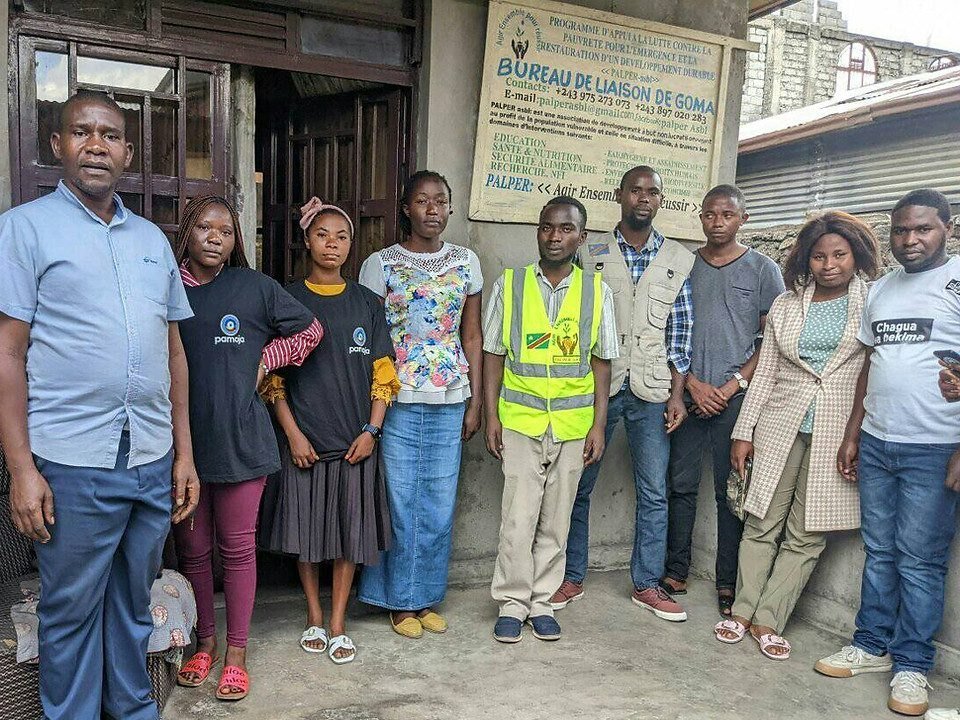
Our Work · 8 Priorities for Progress
PALPER's work is direct and action-oriented. Our teams identify and repair damaged water infrastructure, deliver immediate safe water solutions, rebuild agricultural roads, and lead community education events.
Repairing water infrastructure, delivering water, supporting hygiene and access to treatment, and making water collection safer for women and girls.
Explore our water work →Community programs to enhance literacy, teach practical skills, and empower women and children to lead their communities.
Explore our education work →Food assistance and agricultural recovery, with priorities that include quality seeds, crop storage and routes to market.
Explore our food-security work →Fighting slavery, providing refuge, and protecting children and women through peaceful conflict resolution and family planning.
Explore our protection work →Combating cholera, measles, and monkeypox through disease surveillance, vaccination drives, and community hygiene education.
Explore our health work →Village savings and solidarity groups that help families invest in farming and small businesses.
Explore our livelihoods work →Tree planting and practical care for the environment, from sorting waste to composting for trial gardens.
Explore our environmental work →Mapping water sources and listening to residents to understand needs and improve practical solutions.
Explore our research →Clean water & community health
Repairing water systems. Bringing water closer to home. Helping families prevent and respond to waterborne illness. Our water teams work with communities across North Kivu to make daily life safer.
Explore our water work →Meet the Team
PALPER is led entirely by women and men from North Kivu, engineers, microbiologists, human-rights lawyers, agronomists, and educators who refused to leave when others did.
See the full team →Executive Leadership
Clean Water Help is a United States 501(c)(3) run entirely by volunteers, including more than 25 PhDs and professional engineers. It designed the filter program in Goma, funds it, and takes nothing for overhead. PALPER runs every system on the ground and reports on every phase in writing.


Empower a Community
Help communities restore water access, treat water close to home, and keep local water services working.
Gifts are received by Clean Water Help, a United States 501(c)(3), which buys the filters and pays PALPER’s field costs to install them. About $80 installs one filter shared by five households. For project budgets or partnership questions, contact PALPER. Registered Non-Profit N° JUST./SG/20/1170/2018.